Entryway Lighting Ideas
A practical step-by-step guide to entryway lighting ideas, including preparation, instructions, common issues, tips, and next steps.
Entryway Lighting Ideas
This guide offers practical, stylish entryway lighting ideas to transform your home's first impression. You'll learn how to choose fixtures, layer light, and create a welcoming atmosphere that balances function and décor, all while avoiding common mistakes like harsh glare or poor placement.
Fast Answer
- Combine overhead, accent, and task lighting to create a balanced, inviting entryway that is both functional and visually appealing.
- Choose fixtures that match your architectural style and scale, and always use dimmers to adjust brightness for day and night.
Before You Start
- Measure your entryway dimensions, including ceiling height, width, and any architectural features like arches or columns.
- Identify the primary activities in your entryway, such as removing shoes, checking mail, or finding keys, to determine where light is most needed.
- Consider the natural light that enters the space during different times of day to plan for supplemental lighting.
- Review your existing outlets, switches, and wiring to know your installation options and whether you need to call an electrician.
Step-by-Step Instructions
Plan Your Lighting Layers for Depth and Function
Start by planning a layered lighting scheme that combines three types: ambient, task, and accent. Ambient lighting provides overall illumination, usually from a ceiling fixture or recessed lights. Task lighting focuses on specific areas like a console table for sorting mail or a bench for putting on shoes. Accent lighting highlights artwork or architectural features, such as a wall niche or a piece of sculpture. In your entryway, you might use a pendant or chandelier as ambient light, a small lamp or sconce near the entry table as task light, and track lighting or picture lights to accent art. A good plan balances these layers to avoid dark corners and glare. Practical check: draw a simple floor plan with your entryway’s layout and mark where each light type will go. This ensures you cover all activity zones and create visual interest. By mapping your layers, you prevent overlap or gaps that can make the space feel uneven.
Select a Statement Overhead Fixture That Fits Scale
Choose a ceiling fixture that serves as both the main light source and a focal point. The size of the fixture should match the room’s proportions: for an entryway, a general rule is to add the room’s length and width in feet, and that sum (in inches) should be the fixture’s diameter. For example, a 10x10-foot entryway would suit a 20-inch-wide fixture. Also, consider the ceiling height: lower ceilings need flush mounts or semi-flush mounts, while higher ceilings can accommodate hanging pendants or chandeliers. Ensure the fixture provides enough ambient light for safe navigation. A practical check: hold the fixture at the estimated height and stand back to see if it feels proportionate. If it overwhelms the space, choose a smaller size. This check prevents a common mistake: buying a chandelier that is too large or too small for the space, which can look awkward and impact light distribution.
Position Wall Sconces for Flattering Task and Accent Light
Wall sconces offer both task and accent light while saving floor space. Place them at eye level or slightly above, typically around 66 to 72 inches from the floor, to illuminate a mirror or artwork. For a console table, position sconces on either side to light the surface for sorting mail or dropping keys. If you have a dark hallway, spaced sconces create a rhythmic glow. When installing, check that the wiring is accessible and the sconces are rated for indoor use. A practical check: stand in the likely positions where you’ll use the light and make sure the light doesn’t cast harsh shadows on your face. Also, ensure the sconce placement is symmetrical for a balanced look. Why this check matters: poor sconce placement can create unflattering shadows or leave the task area dim, defeating the purpose. By simulating real use, you install fixtures that actually work for your daily routines.
Add Task Lighting at Key Surfaces Like Consoles and Benches
Task lighting is crucial for activities like finding keys, opening mail, or checking your reflection before leaving. Place a small lamp on a console table, or install under-cabinet lights if you have a built-in shelf or cubby. For a bench area, consider a floor lamp that directs light downward for reading while putting on shoes. Choose task lights with adjustable arms or shades to direct light where needed. A practical check: walk through your typical routine (coming home, leaving) and see each lit surface from your natural height. Ensure the light doesn’t glare in your eyes or leave the work area in shadow. Why this matters: task lighting is all about functionality, and if it’s poorly angled, you’ll end up not using it or fumbling in the dark. By testing with your actual movements, you ensure the light serves you efficiently. Also, consider dimmable task lights for added flexibility.
Incorporate Accent Lighting to Highlight Decor and Architecture
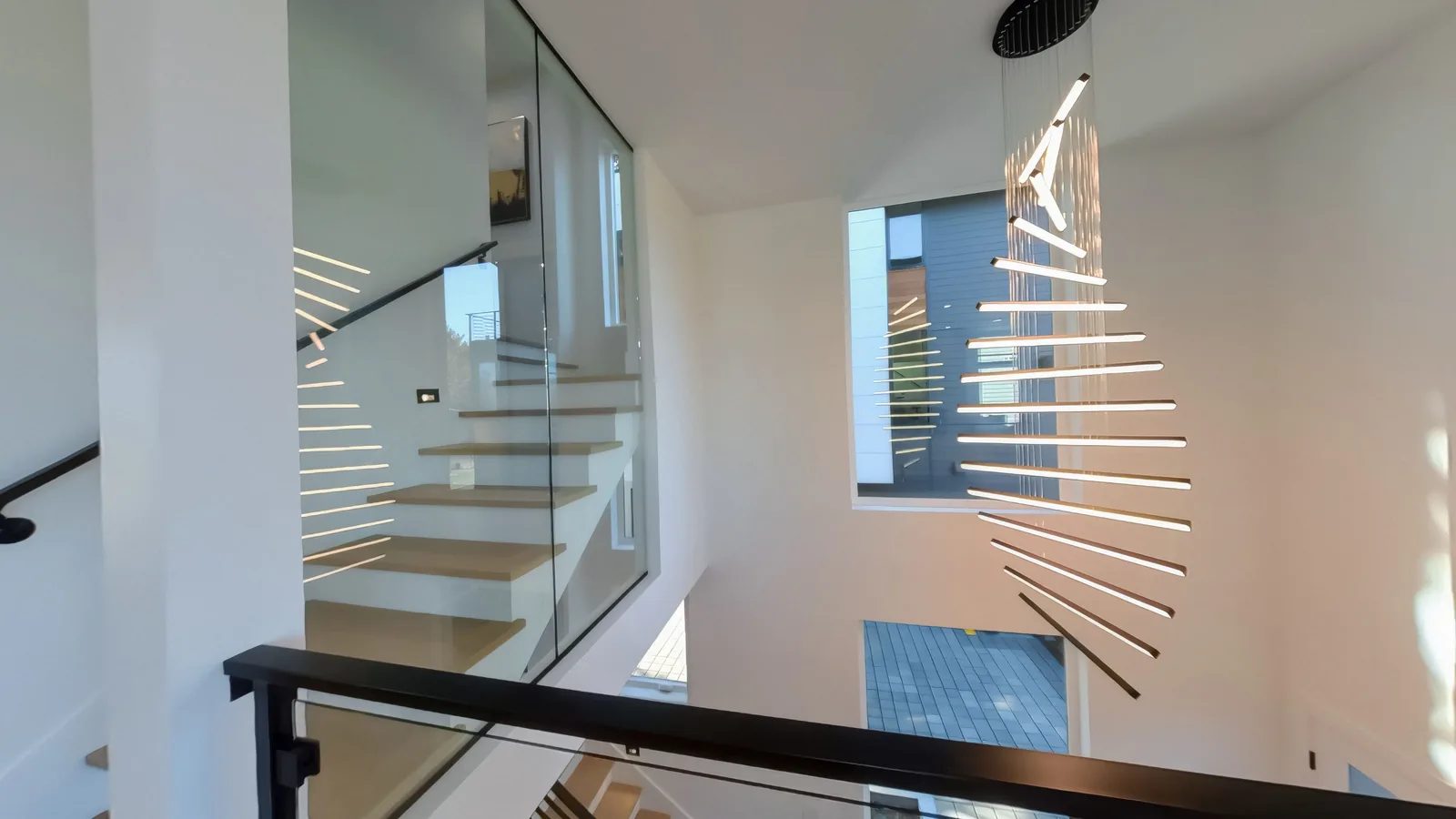
Accent lighting adds drama and draws the eye to interesting elements like artwork, a plant, or a textured wall. Use adjustable spotlights, picture lights, or LED strip lights tucked into shelves or behind a curtain rod. Aim for a 3:1 ratio of accent to ambient light for a subtle effect. For wall art, position a picture light above the frame, or use track lighting aimed at the art. For a plant, an up-light placed behind the pot creates a lovely silhouette. A practical check: turn on your accent lights alone and look at the highlighted objects from across the room. Ensure the beam of light doesn’t create harsh hotspots or wash out colors. Why this matters: good accent lighting should enhance, not distract. If the light is too intense, it can create glare; if too dim, it’s pointless. This check helps you fine-tune angles and intensities for a balanced, inviting glow.
Install Dimmers and Smart Controls for Flexibility and Energy Saving
Dimmers are essential for any entryway, allowing you to adjust light levels for different moods and times of day. Install a dimmer switch for your overhead light and any lamps that are on your main circuit. Smart bulbs or smart switches let you control lighting remotely or with voice commands, which is handy when you arrive home with your hands full. Choose dimmer switches that are compatible with your bulb type (LED, incandescent, etc.) and check the load rating. A practical check: after installation, test the dimmer from its lowest to highest setting to ensure the light doesn’t flicker or hum. Also, program a smart schedule to turn lights on at sunset if you have a smart home system. Why this matters: improper dimming can cause buzzing or reduce bulb life. By testing and configuring, you ensure smooth operation and extend your bulbs’ longevity, while also saving energy when you don’t need full brightness.
Quick Reference
| Situation | Action | Why it helps |
|---|---|---|
| You have a small, narrow entryway and need overhead light without a bulky fixture. | Install a flush-mount ceiling light with a modern, compact design, and complement it with a wall sconce on the side. | This provides even illumination without taking up visual space, keeping the area open and avoiding a cluttered feel. |
| Your entryway has a high ceiling and you want to make a dramatic statement. | Choose a large chandelier or pendant with a long drop, but ensure it hangs at least 7 feet above the floor. | A larger fixture fills the vertical space and impresses guests, while proper height prevents anyone from hitting the light. |
| You often come home in the dark and have your hands full with groceries or bags. | Install a smart light switch that you can turn on via a smartphone app or a keypad outside the door. | This allows you to switch on the light before entering, making it safer and more convenient without fumbling for a switch. |
Common Issues
- The entryway is too dark, even with an overhead light on.: Add a floor lamp or table lamp to fill shadowy corners, and consider increasing the wattage of your bulbs or using brighter LEDs. Also, ensure your overhead fixture is not blocked by tall furniture or a large shade.
- The light is too bright and harsh, causing glare when you enter.: Install a dimmer switch, use frosted bulbs or shades to soften light, and switch to warm white bulbs (2700-3000K) to reduce glare and create a cozy atmosphere.
- The entryway feels uninviting despite having lights.: Layer your lighting with a mix of ambient, task, and accent lights. Add a small lamp on a console to create warmth, and use accent lighting to highlight a piece of art or a plant, which makes the space more welcoming.
Advanced Tips
- Consider using a motion sensor for your entryway lights, so they turn on automatically when you arrive, but set it to a low sensitivity to avoid false triggers.
- For a modern look, use LED strips under a floating bench or shelf to create a floating effect that washes the floor with soft light.
- If you have a one-story entryway with a ceiling pocket, install a skylight or solar tube to bring in natural light during the day, reducing your need for artificial lighting.
Final Checklist
- I have measured my entryway and chosen a fixture size that matches the scale of the room.
- I have planned a mix of ambient, task, and accent lighting to cover all activities and create depth.
- I have installed dimmers or smart controls to adjust light levels for daytime, evening, and night.
- I have tested all light placements from my natural standing position to ensure there are no harsh shadows or glare.
FAQ
What is the best color temperature for entryway lighting?
For entryways, a warm white color temperature of around 2700K to 3000K is usually best. This creates a welcoming and comfortable atmosphere, unlike cooler daylight (5000K+) which can feel stark and institutional. Warm light also flatters skin tones, making everyone look good as they arrive.
How many lights do I need in my entryway?
The number depends on the size and layout. For a small hallway, one overhead light and a table lamp might suffice. For larger spaces, aim for a combination: an overhead fixture, at least one task light (e.g., a console lamp), and one accent light (e.g., a picture light). Layer two to three light sources to avoid shadows and create a balanced look.
Can I install lighting myself or should I hire an electrician?
If you are comfortable with basic electrical work, you can replace a ceiling fixture or install plug-in sconces. However, adding new wiring boxes or running new circuits requires a licensed electrician to ensure safety and code compliance. Always turn off the power at the breaker before any work, and if you are unsure, consult a professional.